
The river is leggy, she runs. Arms, in flow from hugging the ocean. Somewhere to be, but she goes slowly. Like us. The river is a ribbon, like blood, sewn through the land like the threads of our circulatory system. Heraclitus would say that we cannot step into a river twice. Home, a place to return, is an illusion he would say, a tuft of nostalgia, riding on your coat sleeve through the bends.
I’ve stepped many times in this particular bend. It has shed its shell into my waking and nighttime dreams, waxed like the phases of the moon from my memory. Sometimes it is the luminescent, pearled memory of a power outage, my sister and I sitting on the trunk of our mom’s car, peering into a clear and constellated sky. Sometimes it’s the wreckage of a drunk and sad night before I knew how to love myself.
Sense of Place
Place based studies is pluralistic, it acknowledges that the human mammal is a composite. The discipline itself is a collage of approaches: ethnography, anthropology, sociology, Indigenous and Traditional Ecological Knowledge. It is also softer than an empirical want: it is both observation and lived experience; feeling, memory, yearning and rootedness. A sense of place, if you will.
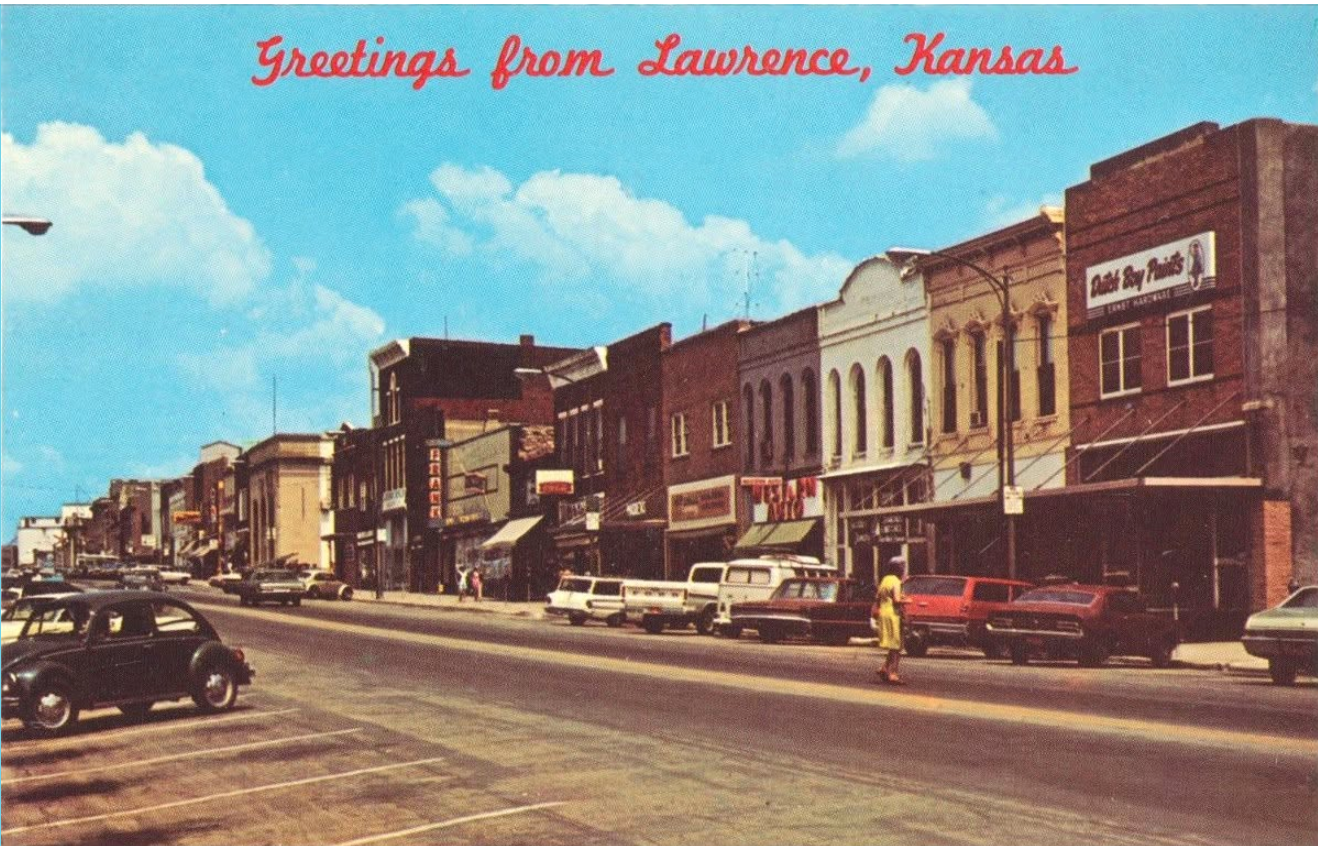
I’ve returned home to Lawrence, Kansas and as I restart my life here for the third time I wonder: how does one understand this yearning for a place? How does one understand this knowing — that one is home?
Why do some places speak to you while others are silent?
The Primal Landscape
I see turtles and worms. The splinter of a skateboard and bruised silver trucks. I taste Little Debbie snacks and stolen Pepsi’s. There’s frybread and sizzle of heat rising from the cookout.
The primal landscape is the language of human geographers — a bit psychological and academic, but a felt sense and network of sensual memory nonetheless.
Why is Kansas so native to my sense of self? Perhaps because it is my baseline for all other places, because we formed alongside one another in a sensually dense time in our lives. The earth and Kansas was and is running towards the end of the Holocene, it’s perfect period; I was running wild through adolescence.
The primal landscape is developed through play. It is learning chess in the backyard, clamoring barefoot up a tree and learning to pull the sweet nectar from honeysuckle.
I think of all the places I have lived and the most memorable of them all, the most primal of them all have had a sense of joy and wildness imbued in them. The places I’ve disliked are likely that way because I was forced into Saturnian structures: work, lather, rinse and repeat. The sense of play, and thus my attachment to a place was simply not able to form.
The Land is a Subject in Its Own Right
To develop an attachment to a place one must, either subconsciously or consciously acknowledge the land as a subject, not just an object to be acted upon and exploited.
Animism must be the root of such beliefs. It is the belief that the fabric of the universe, the material world that you experience is wholly conscious. That the land carries memories into itself, that this living is a collaboration between humans, land, and more-than-human actors. When you go to a place, you are experiencing an intermingling of personal and societal history and mini epochs of climate, geology, commerce, friendships, bonds, war, and disaster.
If the land is a subject in its own right, if the land is in relationship to us as people, then we are morally obligated to protect it. We’re taking this practice seriously lately and have started to grant the land a sort of personhood. This has been a hard won and complicated process legally, but it is one of many ways for humans to act as guardians of the land.
In Lawrence, I have to find ways to get back to the land. Consume its fruits, pollen, and bacteria. I have to bring its flowers into my home and take big sips of its scent. I have to volunteer at the community orchard. I have to stand in the hot sun talking to an herbalist from Paola about what makes his nettles special. I have to give of myself because she gives so much to me. Because she is both her own thing and our thing.
Solastalgia – A Grief for Negative Change to Your Home
It was September 2017 and I had just returned from a hike on the Washington side of the Columbia River Gorge. My roommates and I reached the apex of the trail, and while congratulating ourselves, noticed a plume of smoke over the horizon. Thinking nothing of it, we returned home only to stare in shock as the local news described the start of the Eagle Creek Fire.
Ash fell from the sky and caked the cars outside my house on Southeast Division in Portland. Walls of flame shot towards the sun, trees old and new stood scarred and blackened. Humans and other creatures retreated. Approximately 50,000 acres of the Columbia River Gorge – ravaged. A teenage boy started it all by lighting fireworks on the trail.
It was as if the land’s ache reached inside and tore my heart to shreds.
Almost ten years later the Spokane Complex fires ripped through 10,000 acres, causing the evacuation of 60,000 people. This time I watched the carnage from my work’s Instagram account. Post after post revealed yet again, the open scar of the earth’s innards. I was in the Midwest, but I felt, along with other losses in my life, a deep and profound grief about my former home. This was familiar.
Solastalgia is the grief one feels as they watch a devastating and dramatic change happen to their home in real time. As more and more forest fires arise, solastalgia will rise with it. As more and more of the world experiences climate change, the more we will recognize solastalgia. And the more we care, the more attached to a place we are, the more we will sit side by side as solastalgia takes up residence in our being.
But like all feelings, like all relationships, we must acknowledge that not all is lost amidst the grief, and that sometimes, even when things have changed, you can return home.
1 Comment
[…] my first version of life in Lawrence I lived in subsidized housing. The projects, a place called Edgewood at the intersections of 16th […]